Home / Encino
Encino, Los Angeles
Pool removal in EncinoFrom Ventura Boulevard to Encino Hills: a leave-no-trace pool demolition for a neighborhood named after its oaks.
Encino is part of the City of Los Angeles, so the LADBS grading-permit bulletin applies. What changes from yard to yard is the slope of the lot, the width of the gate, and whether the pool’s next life is a garden or something you can build on.
- City of Los Angeles permits
- Encino Hills access
- ADU-ready full removal
A Valley neighborhood with two housing stories
The flats and the hills do not share one kind of backyard.
Encino sits in the central southern San Fernando Valley and on the north slope of the Santa Monica Mountains. Mapping L.A. and Wikipedia place Reseda, Lake Balboa and the Sepulveda Basin to the north, Sherman Oaks to the east, Brentwood to the south and Tarzana to the west.[2][3] The name comes from Rancho Los Encinos — the ranch of the holm oaks — and from the Spanish word related to those trees.[2]
The neighborhood’s two primary ZIP codes tell different housing stories. Taken together (91316 and 91436), the ACS 2024 5-year estimates count about 19,993 housing units. About 75 percent were built before 1980, and about 45 percent were built in the 1950s or 1960s.[4][5][6] About 54 percent of those units are single-family detached homes.[4]
ZIP 91436, which covers more of the hillside and larger-lot Encino, looks even more like estate country: about 82 percent of its housing units are single-family detached.[6] Those are the yards where a pool is often original to the house, the side gate may be the width of a car rather than a loader, and “leave no trace” means protecting a landscape that cost more than the demolition.
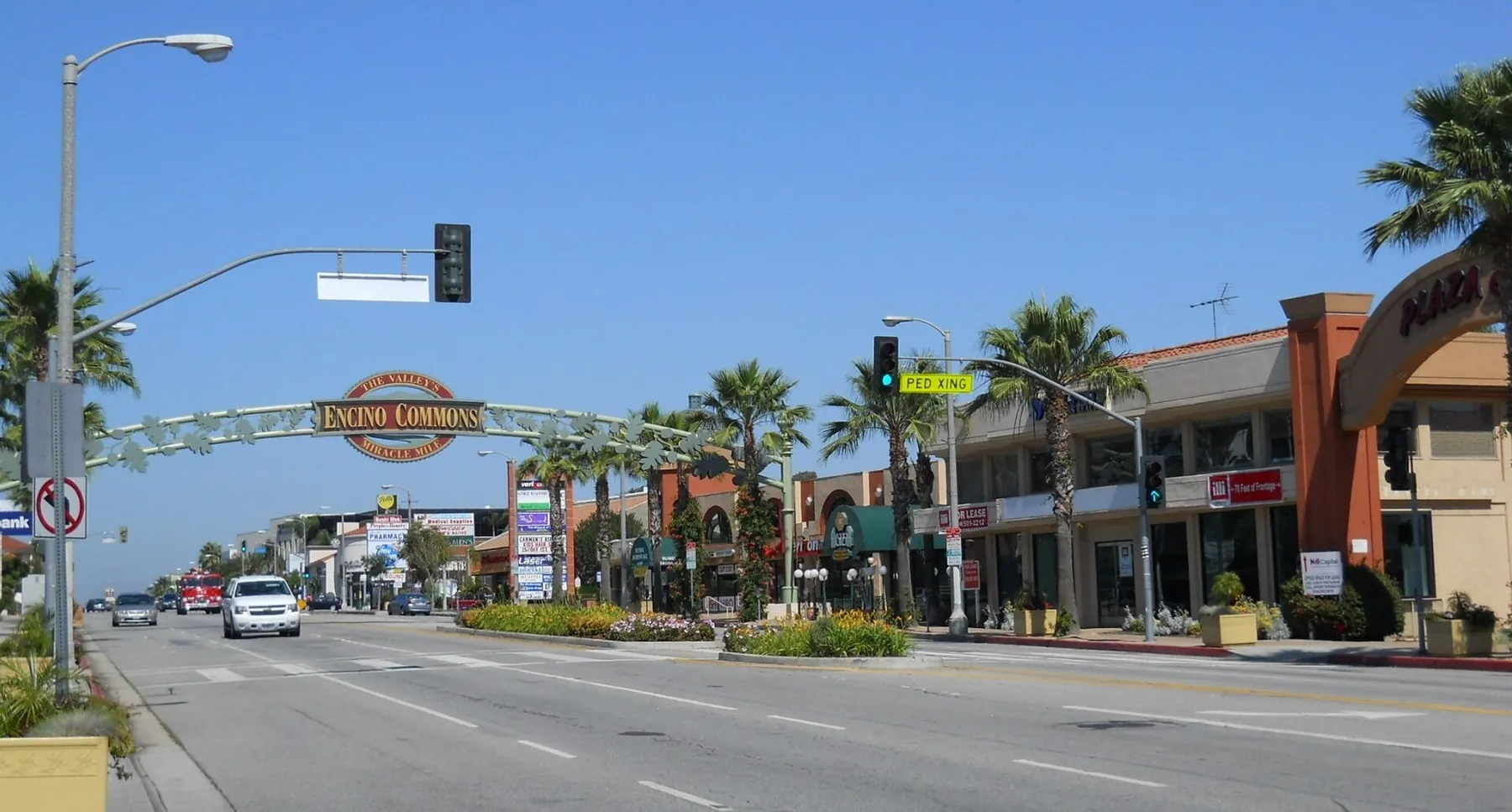
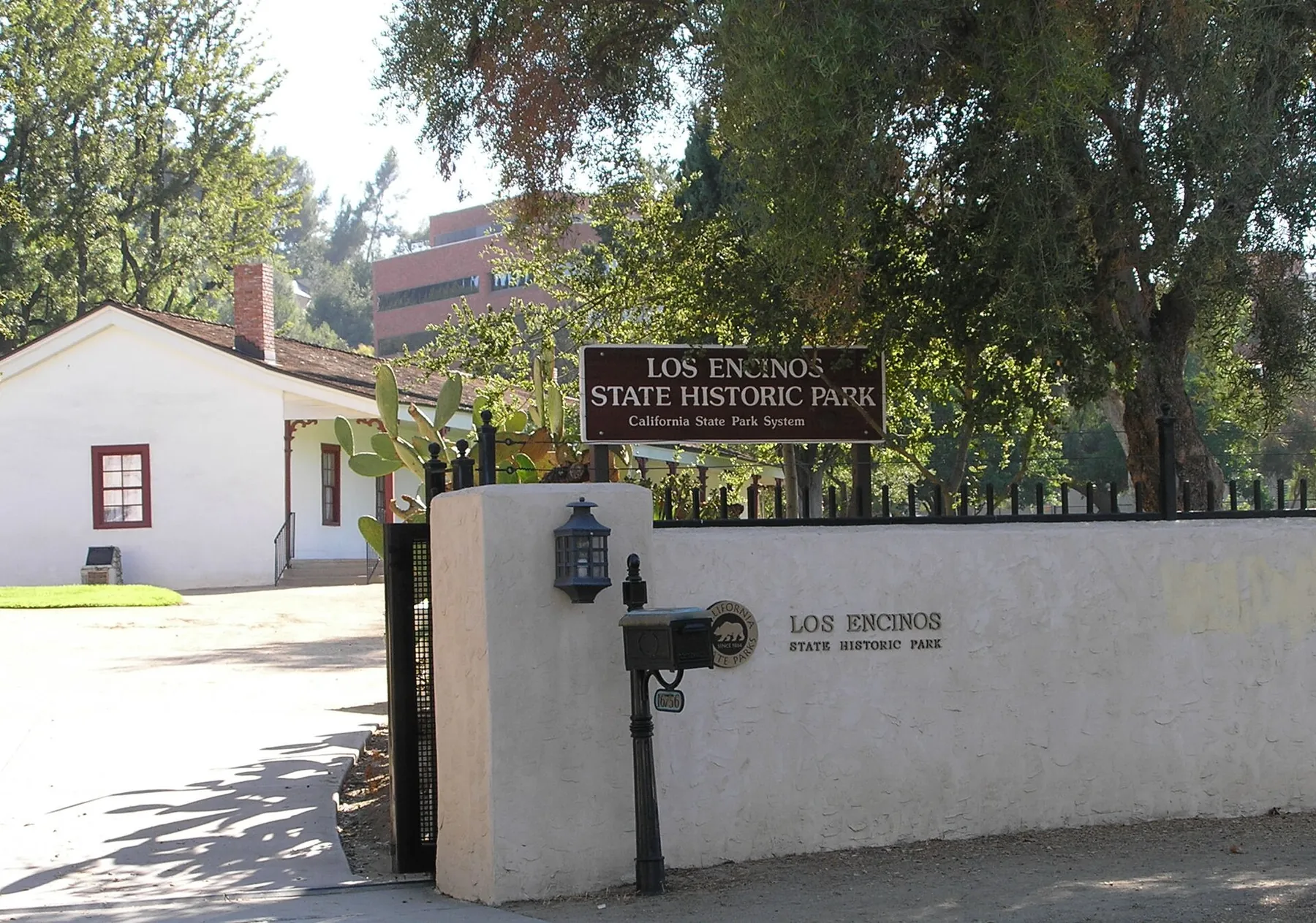
Ventura Boulevard, White Oak, the hills
Local landmarks are useful for more than color.
Ventura Boulevard is Encino’s frontage: Encino Commons, shops and the long commercial strip people use as a landmark when they describe which side of the neighborhood they live on.[2] A few blocks away, Los Encinos State Historic Park preserves buildings from Rancho Los Encinos, including the de la Ossa adobe.[2][7]
The neighborhood’s namesake tree is gone. A California live oak long known as the Encino Oak died in 1998; a monument stands near Ventura Boulevard and Louise Avenue.[2] The oaks that remain, along with the park, are a reminder that Encino yards are often about trees as much as they are about turf — another reason a demolition route has to be planned instead of improvised.
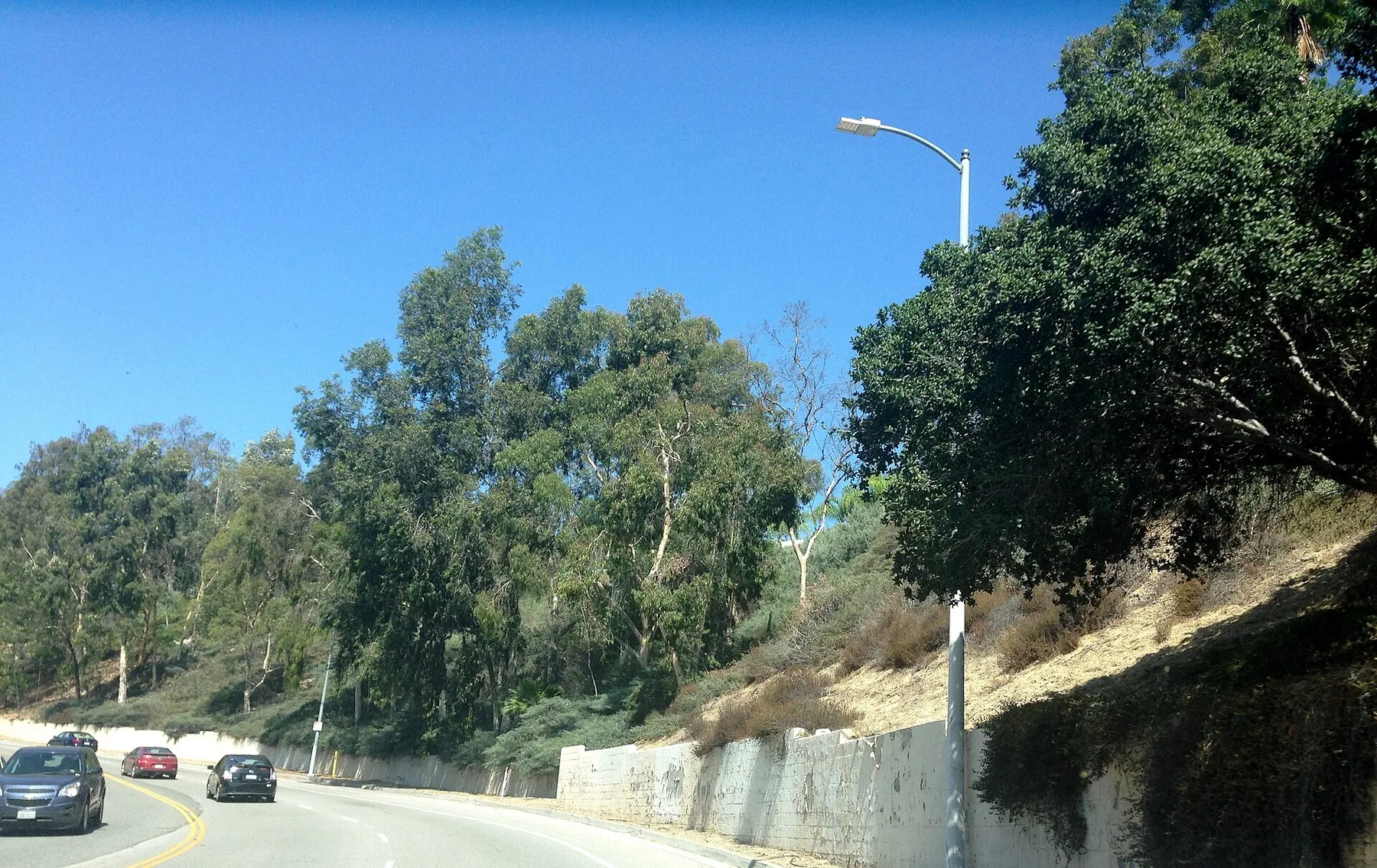
Hill streets climbing off Ventura toward Mulholland raise the bulletin’s slope rule and, when a site is mapped in the Hillside Grading Area, the extra grading pre-inspection.[1] On the Valley floor, toward Balboa and the Sepulveda Basin, access is often easier, but the same permit and compaction rules still apply.
If you plan to build — an ADU, a casita, a larger outdoor structure with footings — Encino follows the citywide rule: the shell comes out, fill is compacted and tested to at least 90 percent relative compaction, and no foundation goes in until the compaction report is approved.[1][8]
What an Encino leave-no-trace job is protecting
Gates, oaks, and a finished motor court.
01
The approach
Long drives and decorative paving should not become the sacrificial path for a loader. Mats, a marked route and same-day haul-off are the difference between a careful job and a second repair project.
02
Trees and irrigation
Encino’s identity is tied to oaks.[2] Root zones, drip lines and irrigation mains along the pool need a plan before the shell is broken.
03
Neighbors and streets
Quieter residential streets still have to host trucks. Staging should be deliberate, not improvised against someone else’s hedge.
04
The finish grade
On a large lot it is tempting to leave a low spot “for later.” A leave-no-trace grade matches the surrounding lawn or planter so the old deep end does not collect the first storm.
Published cost ranges are citywide; they live on the permits and cost guide and in the homepage estimator, each labeled as a rough estimate from its source.[9][10]
Applying the city bulletin on an Encino lot
91436 and the Valley floor are both Encino, and they are not the same demolition.
On a Valley-floor lot toward Balboa or the Sepulveda Basin, access is often the ordinary side-yard problem, and a landscaping fill-in may fit if the ground is eligible and no one plans to build.[1][2]
In ZIP 91436, where about 82 percent of housing units are single-family detached, the pool is more often paired with a longer drive, a tighter gate and a landscape that should still look finished when the trucks leave.[6] If that lot also climbs, the 10 percent slope rule and any hillside grading extras decide the method before anyone talks about finish grade.[1]
Encino’s oak story is not decoration here. A demolition route that ignores trees around the pool is not a leave-no-trace route.[2] Say in the form whether you are in the hills or the flats, and what around the pool must stay.
Have an Encino pool you are ready to erase?
Request a free quote. Mention Encino Hills or the flats, and what you want the space to become.
Get Your Free Quote →FAQ
Encino pool removal questions
Sherman Oaks pool removal · Permits and cost · Los Angeles homepage
Is Encino in the City of Los Angeles for pool removal permits?
What is different about Encino Hills?
How much does Encino pool removal cost?
Sources
- Los Angeles Department of Building and Safety, Information Bulletin P/BC 2023-111: Backfill of Swimming Pools (effective January 1, 2023; previously issued as P/BC 2020-111)
- Wikipedia: Encino, Los Angeles
- Los Angeles Times Mapping L.A.: Encino
- U.S. Census Bureau, American Community Survey 2024 5-year estimates (2020–2024), tables B25001 (Housing Units), B25024 (Units in Structure) and B25034 (Year Structure Built), via Census Reporter
- Census Reporter profile: ZCTA 91316
- Census Reporter profile: ZCTA 91436
- California State Parks: Los Encinos State Historic Park
- Los Angeles Department of Building and Safety: Accessory Dwelling Units (ADU)
- Angi: How Much Does Pool Removal Cost in Los Angeles, CA? [2026 Data] (updated June 9, 2026)
- Demolition Los Angeles CA: Pool Demolition & Removal Services in Los Angeles (published estimate table)
- Encino Neighborhood Council (EmpowerLA)